
About Elephanta Caves
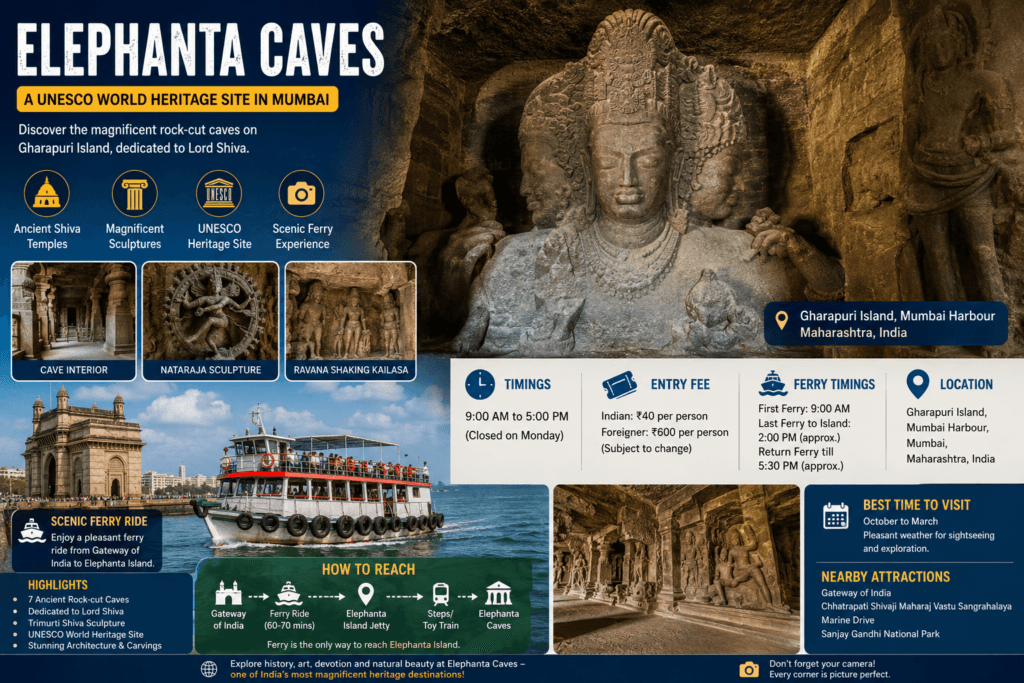
Elephanta Caves are one of India’s most remarkable archaeological treasures and a UNESCO World Heritage Site located on Gharapuri Island near Mumbai, Maharashtra. Famous for their magnificent rock-cut sculptures dedicated to Lord Shiva, the caves attract thousands of visitors, historians, photographers, and spiritual travelers every year.
Situated in Mumbai Harbour, Elephanta Caves offer a unique combination of history, art, religion, and scenic sea travel. Visitors can enjoy a ferry ride from the Gateway of India before exploring one of the finest examples of ancient Indian rock-cut architecture.
The cave complex is renowned for its massive sculptures, intricate carvings, ancient temples, and the iconic Trimurti statue of Lord Shiva, which is considered one of the greatest masterpieces of Indian art.
Where Are Elephanta Caves Located?
The caves are situated on Gharapuri Island in Mumbai Harbour, approximately 10 kilometers east of the Gateway of India.
Elephanta Caves Location
- State: Maharashtra
- City: Mumbai
- Island: Gharapuri Island
- Region: Mumbai Harbour
- Distance from Gateway of India: Approx. 10 km by sea
- Distance from CSMT: Approx. 15 km
- Distance from Navi Mumbai: Approx. 25–30 km
The island can only be reached by ferry, making the journey itself a memorable experience.
History of Elephanta Caves
The history of Elephanta Caves dates back between the 5th and 8th centuries CE. Although historians continue to debate the exact builders, most scholars believe the caves were developed under the patronage of the Kalachuri or early Rashtrakuta rulers.
The site was originally known as Gharapuri, meaning “Village of Caves.”
The Portuguese later named the island “Elephanta” after discovering a large stone elephant sculpture near the island’s shore.
Who Built Elephanta Caves?
The exact ruler who commissioned the caves remains uncertain, but historians generally attribute the construction to Hindu dynasties that flourished in western India during the early medieval period.
The caves were dedicated primarily to Lord Shiva and served as an important religious and cultural center.
Why Are Elephanta Caves Famous?
Elephanta Caves are famous for:
- Giant rock-cut sculptures
- Ancient Hindu temple architecture
- Lord Shiva carvings
- UNESCO World Heritage status
- Trimurti Shiva sculpture
- Artistic excellence
- Historical significance
- Scenic ferry journey
The 20-foot-high Trimurti sculpture depicting Shiva as Creator, Preserver, and Destroyer is the most celebrated attraction of the cave complex.
UNESCO World Heritage Site
Elephanta Caves were recognized as a UNESCO World Heritage Site in 1987 due to their outstanding cultural, artistic, and historical value.
The caves are regarded as one of India’s most important examples of rock-cut architecture and sculpture.
How Many Caves Are There?
The Elephanta Cave complex consists of seven major caves.
Main Cave (Cave 1)
The largest and most impressive cave featuring:
- Trimurti Shiva
- Nataraja
- Ardhanarishvara
- Gangadhara
- Yogishvara
- Ravana Shaking Kailasa
Other Caves
The remaining caves contain:
- Smaller shrines
- Monastic structures
- Water tanks
- Religious carvings
Most visitors spend the majority of their time exploring Cave 1.
How to Reach Elephanta CavesHow to Reach the Island
From Mumbai
The most popular route is:
- Reach Gateway of India
- Purchase ferry tickets
- Board a ferry to Gharapuri Island
- Travel approximately 60–70 minutes across Mumbai Harbour
- Arrive at Elephanta Island Jetty
- Walk or take the toy train
- Climb the steps leading to the cave complex
From Navi Mumbai
Visitors can travel to the Gateway of India by road, metro, or local train and then take the ferry.
Nearest Railway Stations
- Chhatrapati Shivaji Maharaj Terminus (CSMT)
- Churchgate Railway Station
- Mumbai Central Railway Station
Nearest Airport
- Chhatrapati Shivaji Maharaj International Airport
Ferry Service to Elephanta Caves
The ferry ride is one of the highlights of the trip.
Ferry Departure Point
Gateway of India, Mumbai
Ferry Travel Time
Approximately 60–70 minutes
Ferry Timings
- First Ferry: Around 9:00 AM
- Last Ferry to Island: Around 2:00 PM
- Return Ferries: Available until evening
Timings may vary according to weather and season.
Opening Hours & Visiting Time
Opening Hours
- Opening Time: 9:00 AM
- Closing Time: 5:00 PM
Closed Day
Elephanta Caves remain closed every Monday.
Visitors planning a Mumbai sightseeing trip should avoid scheduling their visit on Mondays.
Entry Fee & Ticket Information
Visitors are required to purchase an entry ticket before entering the cave complex.
| Category | Entry Fee |
|---|---|
| Indian Visitors | As per ASI rates |
| Foreign Tourists | As per ASI rates |
| Children | As per Government Rules |
Visitors should verify the latest rates before travel.
Major Sculptures at Elephanta Caves
Trimurti Shiva
The most iconic sculpture depicting:
- Creator
- Preserver
- Destroyer
Nataraja
A magnificent depiction of Lord Shiva as the Cosmic Dancer.
Ardhanarishvara
The combined form of Shiva and Parvati.
Gangadhara
Illustrates the descent of the River Ganga.
Yogishvara
Lord Shiva in meditation.
Ravana Shaking Kailasa
One of the most dramatic sculptures in the cave complex.
Trimurti Shiva – The Main Attraction
The famous Trimurti Shiva sculpture is the highlight of Elephanta Caves.
The sculpture represents:
- Tatpurusha
- Aghora
- Vamadeva
This colossal masterpiece symbolizes the cosmic functions of Lord Shiva and attracts visitors from around the world.
Best Time to Visit Elephanta Caves
October to March
Ideal weather and comfortable sightseeing.
July to September
Beautiful monsoon scenery and lush greenery.
April to June
Summer temperatures can be high, so morning visits are recommended.
Travel Tips for Visitors
- Start early in the morning
- Carry drinking water
- Wear comfortable walking shoes
- Use sunscreen and a hat
- Keep cash for local purchases
- Respect archaeological monuments
- Avoid touching carvings
- Follow ASI guidelines
Nearby Places to Visit
Gateway of India
The starting point for the ferry journey.
Marine Drive
Mumbai’s iconic waterfront promenade.
Chhatrapati Shivaji Maharaj Terminus (CSMT)
A UNESCO World Heritage Site.
Colaba Causeway
Popular shopping destination.
Nariman Point
A famous business and leisure district.
Haji Ali Dargah
One of Mumbai’s most visited religious landmarks.
Elephanta Caves One-Day Itinerary
08:00 AM – Reach Gateway of India
09:00 AM – Board Ferry
10:15 AM – Arrive at Elephanta Island
10:30 AM – 01:00 PM – Explore Main Cave and Sculptures
01:00 PM – 02:00 PM – Lunch & Shopping
02:30 PM – Return to Jetty
03:00 PM – Ferry Back to Mumbai
04:15 PM – Reach Gateway of India
05:00 PM onwards – Explore Marine Drive or Colaba
Related Travel Guides & Maharashtra Heritage Destinations
- Maharashtra Tourist Places
- Ajanta Caves Travel Guide
- Ellora Caves Travel Guide
- Bhaja Caves Travel Guide
- Pitalkhora Caves Detailed Guide
- Ajanta Ellora Travel Guide
- Aurangabad Tourist Places
- Jayakwadi Dam Bird Sanctuary
- Mhaismal Hill Station
- 12 Jyotirlinga List
Useful Resources
Frequently Asked Questions About Elephanta Caves
Where are Elephanta Caves located?
Elephanta Caves are located on Gharapuri Island in Mumbai Harbour, Maharashtra, approximately 10 km from the Gateway of India.
How to reach Elephanta Caves from Mumbai?
Visitors need to travel to the Gateway of India and take a ferry to Gharapuri Island. The ferry journey takes approximately 60 to 70 minutes.
How to reach Elephanta Caves from Gateway of India?
Regular ferries operate from the Gateway of India to Elephanta Island. This is the most popular and convenient way to visit the caves.
Who built Elephanta Caves?
The exact builders are unknown, but historians believe the caves were constructed between the 5th and 8th centuries CE under the patronage of the Kalachuri or Rashtrakuta rulers.
Who made Elephanta Caves?
The caves were created by skilled artisans and sculptors under Hindu dynasties that ruled western India during the early medieval period.
Which dynasty built Elephanta Caves?
Most scholars attribute the caves to the Kalachuri or Rashtrakuta dynasties, although the exact origin remains debated.
Why are Elephanta Caves famous?
The caves are famous for their magnificent rock-cut sculptures, Shiva temples, ancient architecture, and the iconic Trimurti sculpture of Lord Shiva.
What is special about Elephanta Caves?
The site contains some of India’s finest examples of rock-cut art and architecture, including the world-famous 20-foot-high Trimurti Shiva sculpture.
What is inside Elephanta Caves?
Visitors can explore ancient temples, massive sculptures, Shiva carvings, shrines, courtyards, pillars, and intricate rock-cut artwork.
Which god is worshipped at Elephanta Caves?
The caves are dedicated primarily to Lord Shiva and feature several forms of Shiva represented through sculptures and carvings.
Are Elephanta Caves related to Hinduism?
Yes. The caves are a significant Hindu religious site and are dedicated mainly to Lord Shiva.
Are Elephanta Caves Buddhist?
No. Unlike Ajanta, the Elephanta Caves are primarily Hindu caves dedicated to Lord Shiva.
Is Elephanta Caves a UNESCO World Heritage Site?
Yes. UNESCO designated Elephanta Caves as a World Heritage Site in 1987 due to their exceptional cultural and historical significance.
When did Elephanta Caves become a UNESCO World Heritage Site?
The caves received UNESCO World Heritage Site status in 1987.
How old are Elephanta Caves?
The caves are estimated to be around 1,400 to 1,500 years old and date back to the 5th–8th centuries CE.
How many caves are there at Elephanta?
The cave complex consists of seven major caves, with Cave 1 being the largest and most impressive.
How many steps are there at Elephanta Caves?
Visitors must climb approximately 120 to 150 steps from the jetty area to reach the main cave complex.
What are the opening hours?
The caves generally open at 9:00 AM and close at 5:00 PM.
Which day are Elephanta Caves closed?
The caves remain closed every Monday for maintenance and conservation purposes.
Are Elephanta Caves open on Monday?
No. Visitors cannot enter the cave complex on Mondays.
Is Elephanta Caves open today?
The caves are usually open every day except Monday. Visitors should verify current operating status before planning a trip.
Is Elephanta Caves open tomorrow?
If tomorrow is not Monday and weather conditions permit ferry operations, the caves are generally open to visitors.
What is the entry fee for Elephanta Caves?
Entry charges are determined by the Archaeological Survey of India (ASI) and may change periodically. Visitors should check the latest rates before travel.
What is the ferry ticket price?
Ferry ticket prices vary depending on seating class and operator. Updated rates are available at the Gateway of India ticket counters.
How long is the ferry ride?
The ferry journey from the Gateway of India to Elephanta Island typically takes 60 to 70 minutes.
How much time is required to visit Elephanta Caves?
Most travelers spend between 3 and 5 hours, including ferry travel and cave exploration.
Is Elephanta Caves worth visiting?
Yes. The caves are one of Maharashtra’s most iconic heritage attractions and offer a unique blend of history, culture, art, and scenic beauty.
Can visitors take photographs inside the caves?
Photography is generally allowed for personal use. Visitors should follow ASI regulations and avoid damaging the monument.
Is food available on the island?
Yes. Several food stalls, restaurants, and refreshment shops are available near the cave entrance and jetty area.
What is the best time to visit?
October to March is considered the best period due to pleasant weather and comfortable sightseeing conditions.
Why is it called Elephanta Caves?
The Portuguese named the island Elephanta after discovering a large stone elephant sculpture near the shore.
What was the original name of the island?
The island was originally known as Gharapuri, which means “Village of Caves.”
What is the main attraction at the site?
The Trimurti Shiva sculpture, depicting Shiva as Creator, Preserver, and Destroyer, is the most famous attraction.
Can Elephanta Caves be visited during monsoon?
Visits may be affected by rough sea conditions and ferry schedules during heavy monsoon periods. Travelers should check ferry operations before visiting.
Is there a toy train at Elephanta Island?
Yes. A small toy train operates between the jetty and the base of the hill, reducing walking distance for visitors.
How far are Elephanta Caves from the Gateway of India?
The caves are approximately 10 km away by sea route from the Gateway of India.
Conclusion
Elephanta Caves represent one of India’s greatest cultural and artistic achievements. From the breathtaking Trimurti Shiva sculpture to the scenic ferry journey across Mumbai Harbour, the experience offers a fascinating blend of history, spirituality, architecture, and adventure.
Whether you are a history enthusiast, photographer, student, pilgrim, or tourist, a visit to Elephanta Caves is an unforgettable experience that showcases the richness of India’s heritage.
For travelers exploring Maharashtra’s UNESCO World Heritage destinations, Elephanta Caves remain one of the most rewarding places to visit near Mumbai.
Contact Siya Travels
📞 Call / WhatsApp: 9860080525
🌐 Website: www.siyatravels.com
Explore Maharashtra’s Heritage with Siya Travels – Comfortable, Reliable & Professional Travel Services.